 Live Radio
Dear Reader,
I’ve owned my current pair of hiking boots for years now. They’ve gotten me through everything from neighborhood walks to backpacking trips, and as a TV Producer here at NorCal Public Media, they’ve been my go-to for long days of filming. Now with worn tread, fraying, and holes, these boots are long overdue for retirement – but I can’t seem to let them go.
My name is Hannah Lee, and I’m a storyteller of all things environment and climate. In this monthly newsletter, I share stories that give us different ways to think and care about our natural world.
In my work, I generally try to steer our climate conversations away from inpidual consumption, and towards the systems and infrastructure at the root of environmental problems. But in my own life, I do look for small ways to minimize my impact on the planet – and making those decisions can be pretty complicated.
Replacing my hiking boots has been no exception. My first instinct, as with most items, was to buy them second-hand from a local source – but after weeks of scouring thrift stores and Facebook Marketplace, the right boots still seemed to evade me.
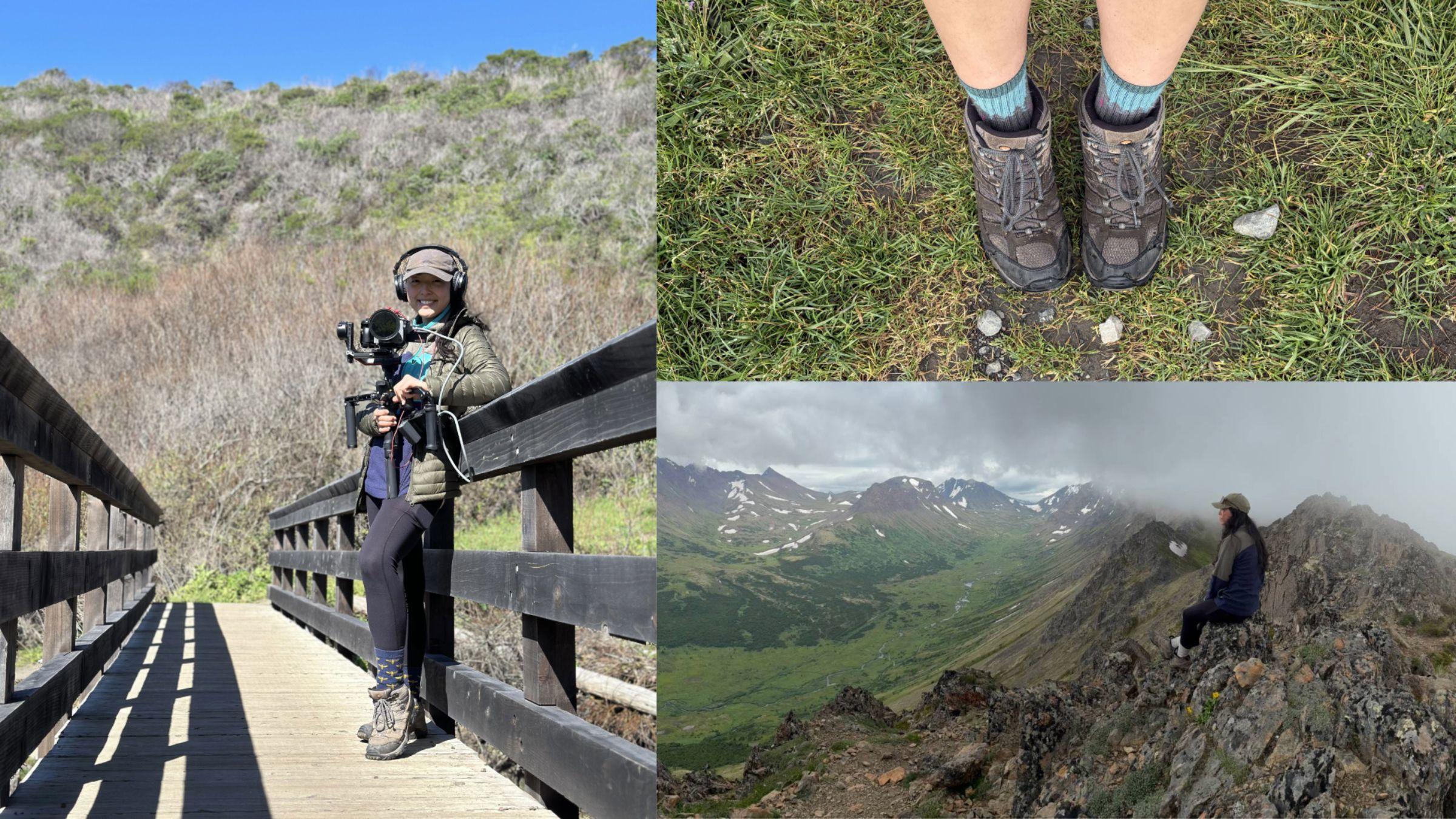 Adventures in my trusty boots.
So I thought, how about widening my scope? I could browse the endless inventories of online secondhand retailers and have the perfect pair shipped right to my doorstep. But then there are the carbon emissions and single-use packaging associated with shipping a product across the country, secondhand or not. I started to wonder if I should just bite the environmental bullet and buy new. After all, brand-new boots would probably have a better lifespan, meaning I could put off going through this dilemma again for that much longer.
I started comparing brands for prices, materials, styles, and features. The explosion of interest in outdoor recreation in recent years has led to a parallel growth in the outdoor gear and apparel industry, with leading corporate giants raking in billions every year. Recreators today have more options than ever in gear that gets us outside to experience all that our planet has to offer. And yet, the planet is no better off. In fact, the accessibility of outdoor spaces is correlated with environmental destruction – from the large-scale disturbance of sensitive habitats to the microplastics shed by our clothes and gear. And at the end of the day, aren’t these companies just playing into the same consumerism that’s driving the destruction of our biosphere? And isn’t it ironic that the very outdoor activities these products are made for rely on natural resources that are being decimated by our endless consumption? Should I just stay home and never buy another pair of boots again?
Okay, I’m spiraling a little bit, and hey – what environmentalist hasn’t?
We live in a time of blowing past emissions targets, extracting and consuming more than ever before, and backsliding on environmental policies that took decades to put in place. It’s no wonder that many of us are burnt out, exhausted, and immobilized. And through this whole boots dilemma, I’d fallen into the very trap that the fossil fuel industry has been pushing for decades: shouldering the full weight of our environmental crisis as an individual.
The question we’re often told to ask ourselves is, how can I be a better consumer? But that’s the thing – consumption is just one aspect of our complex lives. We can quantify our direct impact on the planet in terms of dollars, degrees, or parts per million, and feel that our choices are meaningless in the face of global climate change. But what about our unquantifiable impacts? The ones that are social, cultural, and – maybe most importantly – human. How our choices inspire the people around us. How they ripple out into our communities. How they resonate within us. And I would argue that those are actually much more important.
In other words, it’s not about the boots. It’s about where you go in them.
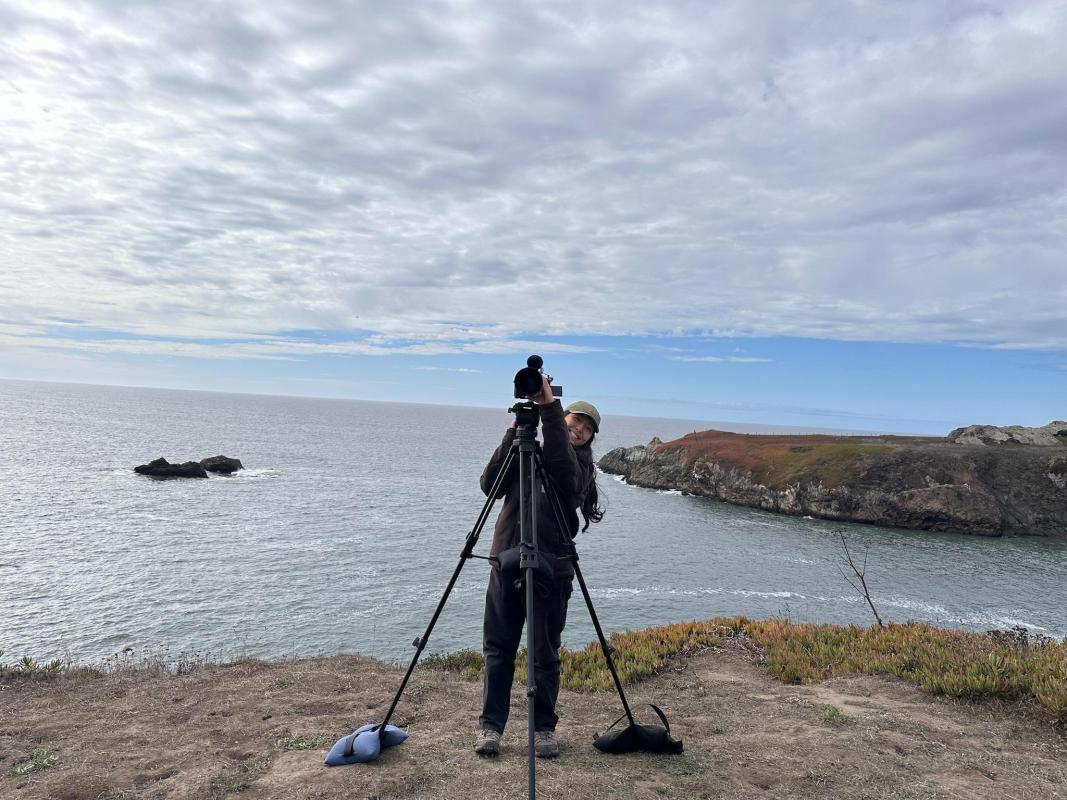 Filming in my boots as always!
So, I’m promising myself to replace mine soon – probably with a secondhand or slightly “eco-friendlier” option. But either way, I know for certain that I’ll be wearing them everywhere from mountaintops to protests, and that they’ll allow me to continue making both the quantifiable and unquantifiable impacts that I’m constantly striving for.
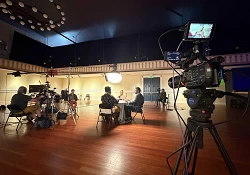
To cap off this month’s newsletter with a piece of good news, I wanted to tell you about an exciting new project from the Center for Environmental Reporting here at NorCal Public Media. A Fighting Chance is a video podcast about the climate wins and solutions that usually fly under the radar, featuring visionary leaders across science, politics, and culture. Hosted by filmmaker Charles Loi, the podcast is a companion piece to our Emmy-winning docuseries Climate California, which he and I worked on together. A big thank you to Charles for helping me write this month’s newsletter!
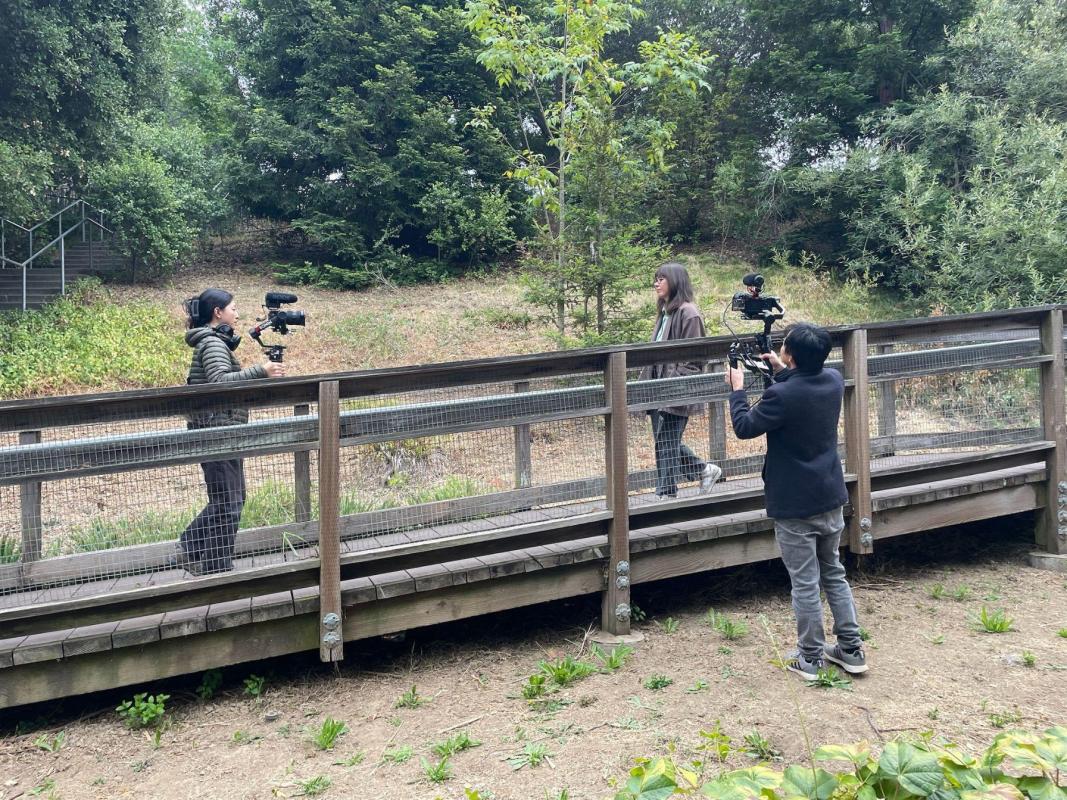 Charles and I each take a camera on a Climate California shoot.
And as always, my hope is to create space for an exploration of ideas, knowledge, and meaning-making together – so please reach out with your thoughts on this edition of Our Planet, Our Voice. It’s as easy as replying directly to this email, and I would love to hear from you!
All my best,
Hannah