 Live Radio
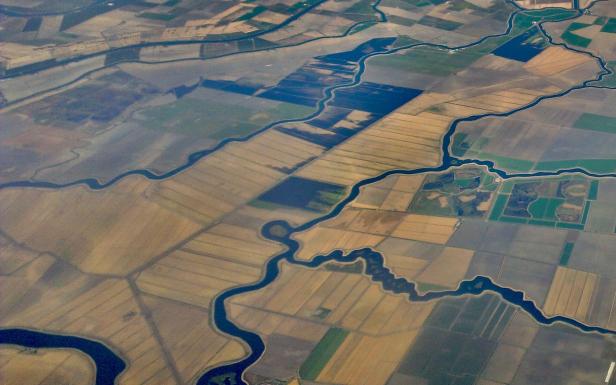 photo credit: Alfred Twu
Farms in the San Francisco Bay Delta.
A new coalition of advocates released their plan to address California’s water problems.
The Water Renaissance Plan for California addresses current water strategies that the coalition claims are outdated, unreliable, and costly.
Bruce Reznik, of Los Angeles Waterkeeper, says this is most effectively illustrated in the way L.A. County gets its water.
"10 million people spread across 88 cities, and yet we are still reliant on more than 60 percent of our water being imported from the Bay Delta, Colorado River, the L.A. Aqueducts," said Reznik.
Reznick says it's left the city vulnerable...
"Obviously these sources in the face of climate change and previous overallocation are just simply not as reliable as they once were," Reznik said."
And because everything is interconnected, Barry Nelson with the Golden State Salmon Association, says the literal drain from Southern California's water needs, leads to an imbalance across the entire state.
"The Sacramento River has experienced in the last 20 years a 95 percent decline in wild spawning salmon, the salmon that are actually the backbone of salmon fishing. It’s the most important salmon river in California. That crash is because of excessive water diversions," said Nelson.
The long-proposed Delta Conveyance Project, DCP, also known as the Delta Tunnel, has been supported by various California Governors.
It would distribute water from the Sacramento River to the south, but its cost has continued to rise and now is estimated to be over $20-billion dollars.
The new Water Renaissance coalition opposes this plan, and offers an alternative, as described by Reznik:
"We use around 1.2 billion gallons of water per day, of that, about 60 percent is imported, which means if we want to go to 80 percent local water we have to find 400 million gallons a day of local water. Can we do that? We are already in planning or implementation of 330 million gallons a day of wastewater recycling projects, now, those are going to be built, you know, some completed very soon, but some are gonna take 10, 20 years," said Reznik.
He outlined other conservation efforts, including reducing water use, recapturing water, and restoring groundwater to reach the goal...and says the coalition, has identified up to 2 million acre feet of local water sources available statewide.
Nelson says they believe a plan that strengthens local water resources benefits all stakeholders, and says that now is the time to act as Californians prepare to elect a new Governor.

 NPR
NPR Spotify